SC Articles

Wear Steel Life Increased Seven Times vs. AR500

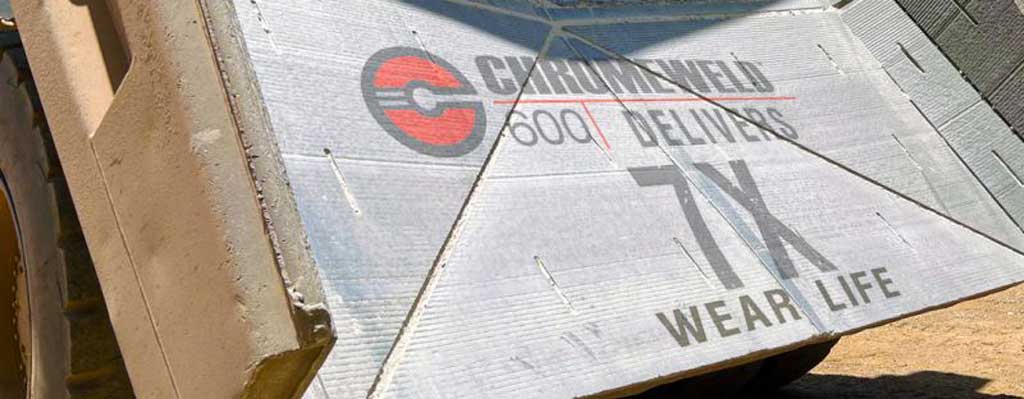
Reducing downtime on haul trucks is critical for mining and aggregate operations, especially when hauling one of the most abrasive materials in the mining industry. Profitability is compromised when your haul trucks aren’t moving because your welding crew is overwhelmed with replacing equipment wear liners. CAT 777E haul truck body has 30mm thick AR500 wear strips welded on the tail – on top of the OEM wear liners! The AR500 strips are changed at 1,200 hours. These AR500 strips lost 18mm thickness in just a few weeks. Cutting wear strips on site, removing worn liners, and installing new strips takes a welding crew a week or longer to get a haul truck back in service. Replacing AR500 Every Other Month Equates to 6 Weeks Downtime Per Haul Truck, Per Year. When your haul truck is not rolling…it’s not generating revenue. The pressures of mining equipment availability forces welding maintenance teams to resort to using old cutting edges and any other materials on hand to extend wear life. This leads to longer maintenance down times and increased haul truck weight, which increases fuel costs and lowers operational profitability. Spec-Cast recognized that Chromeweld™ 600 would dramatically reduce maintenance downtimes and increase haul truck availability. The 10mm Chrome Carbide Overlay (CCO) on a 10mm mild steel base plate has the additional bonus of an immediate 33% weight savings over the 30mm AR500 strips. Custom fabricated Chromeweld ™ 600 liners arrive with plug weld holes, dramatically reduced installation downtime as compared to the AR500 strips. After 2,293 hours of use, the projected wear life of Chromeweld ™ 600 is 7 times longer than AR500. Remember, the 30mm AR500 plates are replaced at 1,200 hours.  Labor savings alone paid for the Chromeweld ™ 600 by avoiding continually replacing the AR500. How Can Your Operations Improve Using Chromeweld ™ 600? 

HOW TO DETERMINE REMAINING WEAR LIFE OF AR STEEL

Wear plate preventative maintenance is typically the most challenging PM task, more than any other task with regard to your equipment. The ‘Run To Failure’ maintenance method without a PM plan, usually requires shutting down your equipment to make critical repairs. Most Abrasion Resistant (AR) steel is only surface hardened as you can see here from the distinct wear line. Once the surface has worn through, the center wears away quickly. Once the surface has been compromised, nearly all inexpensive ‘wear steel’ wears away rapidly at the center of the steel thickness.  Documenting and comparing the QT-Plus ® thickness values over time, allows you to predict how long before you need to replace your equipment. This prevents emergency shutdowns, unplanned budget overruns and dedicated next-day delivery expenses. In the photo, the wear at the bottom has also been compounded when the weld joint has worn away.  Joining welds are not hard or wear resistant. Here the weld was not capped with a hard surface weld to protect the joining weld. Tracking Wear Life Previously their 1” AR400 wear plate under the log haul chains had to be replaced every 48 months, they were worn so thin.  By using QT-Plus ® they more than DOUBLED their wear plate life.  This means after 24 months, the chain would have worn into their previous wear plate about 0.500” or more. The chart below shows their results after 28 months.  The customer was delighted with the increased wear performance. CHAIN DECK MEASUREMENTS GROOVE DEPTH FROM CHAIN WEAR AFTER 28 MONTHS LOCATION WEST WEST CENTER CENTER EAST CENTER EAST 2′ From Tail Pulley .151″ .187″ .161″ .266″ .150″ 8′ From Tail Pulley .070″ .079″ .198″ .221″ .140″ 16′ From Tail Pulley .136″ .151″ .172″ .254″ .170″ @ Bottom of Drain Holes .027″ .063″ .119″ .095″ .086″ Documenting and comparing the QT-Plus ® thickness values over time, allows you to predict how long before you need to replace your equipment. This prevents emergency shutdowns, unplanned budget overruns and dedicated next-day delivery expenses. In the above example, the customer ran another 92 months before having to replace the chain deck. Nearly triple the life of what they had been using previously. This allowed them to plan the project and budgeting when it was convenient for them. Going with QT-Plus ® allowed the customer to document more than R15,000,000 in operational savings compared to ‘Using The Same Steel We’ve Always Used’ several more times. It Is Important To Note These Performance Results Only Work When You Use Wear Resistant Steel Having The Same Hardness Through The Entire Thickness Of The Steel. If Not, Your Plan Is Doomed To Fail. JADCO’s QT Plus ® delivers greater performance IN YOUR WEAR APPLICATIONS than the various AR400 or other wear steel products you have used in the past. Being able to create wear resistant steel having the same hardness throughout the steel, demands you accurately control the quantity of alloying chemistry and precise heat treating. Doesn’t Every Steel Company Make Their Wear Plate Last As Long As JADCO QT Plus ®?The quick answer is No; although the attention to detail required at the steel mill in Pennsylvania is available to anyone. Yet most wear plate distributors choose to reduce the proper quantities and percentages of these essential alloying elements, to get a lower selling price. When you have to cut back on these critical alloys, wear life automatically.

How long will my rubber tracks last?

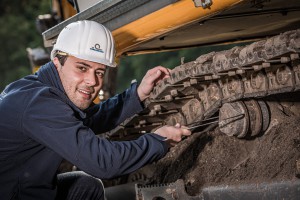
The lifespan of your rubber tracks is impacted by certain factors including the quality, frequency of use, surface on which you drive and maintenance level. To achieve a longer lifespan, it is wise to carry out maintenance regularly including checking for dirt and stones that may accumulate in-between the tracks and inspecting the tension. CARRYING OUT REGULAR MAINTENANCE The maintenance frequency for rubber tracks will depend on how intensive the machine is used and under which conditions. If the machine is often used under difficult conditions or under heavy loads, it is wise to perform maintenance more often. We recommend inspecting the tracks on a monthly basis for possible issues such as tension that is too low, wear and accumulated dirt and stones. It there are issues, they must be resolved as soon as possible. RECOGNISING WEAR TO YOUR RUBBER TRACKS There are various signs by which you can recognise wear to your rubber tracks: Loss of quality: Exposure to UV light from the sun may be harmful to the quality of rubber tracks. This is why all our rubber tracks are stored inside to protect them from high levels of sunlight. Tears: Tears may be caused by something sharp such as construction waste, reinforcing steel or stone rubble. If the iron is deeply torn, moisture can penetrate and cause oxidation (rust). This can ultimately lead to the rubber track breaking. The profile becoming thinner: This can be compared with wear on a vehicle tyre and may be due to being exposed to sharp objects or due to too much pressure being exerted on the tracks. It is essential that you regularly check for signs of wear to recognise and resolve problems in a timely manner. This will prevent unnecessary costs from being incurred. If you have doubts about the lifespan of your rubber tracks or their maintenance, contact us. We will be happy to give you advice and help you further.

Undercarriage Overhaul Part 3

A partial or complete undercarriage overhaul is no simple task. There are clear rules for inspecting undercarriage components, repairing them and assembling them. A lot of knowledge and experience is required to do this job properly, from laying out the chain, through disassembling the track shoes and repairing the guides to overhauling the front wheels. QUALITY AND CAPACITY All components contribute to the quality and capacity of the undercarriage. And it is a very precise matter. Once all the track shoes have been remounted on the chain, the bolt tension is checked with a torque wrench. The tension is important to prevent bolts from loosening or stretching (if they have been screwed in too tightly). All the undercarriage components are then aligned so that they run perfectly in a line and the chain is sealed around the undercarriage sleeves. As an end piece, the end journal is pressed into the (last) end link to lock the chain. Then there is one final check to ensure that the chain is at the right tension. This must also be rechecked at about one hundred hours of operation after the undercarriage overhaul. IMPACT ON SERVICE LIFE Regular inspection and a well thought-out undercarriage overhaul definitely have a positive impact on the service life of your machine and also drive down costs over time. The easiest way to determine the condition of the undercarriage is to check for any problems and wear patterns during the regular cleaning activities. Early detection can prevent worse problems later. DON’TS DURING UNDERCARRIAGE OVERHAULS: DO’S DURING UNDERCARRIAGE OVERHAULS:

Undercarriage Overhaul Part 2

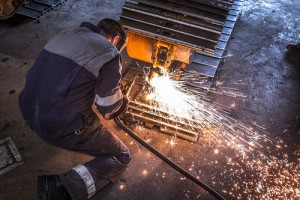
During a partial undercarriage overhaul the top and bottom rollers are not renewed and this is always to the detriment of the service life of the undercarriage to a greater or lesser extent. This is simply because the machine can operate for more hours when new components can bed in together properly and not affect each other’s wear resistance. In addition, a partial undercarriage overhaul unfortunately is mostly synonymous with temporary fixes. A quick repair may still be carried out in the field, but a proper undercarriage overhaul needs to be done in a workshop. In the Workshop When a machine comes in for a complete overhaul, it is jacked up to get it off the ground. Experienced professionals then make use of the most modern and innovative equipment to wash the undercarriage thoroughly and to clean the track shoes. Only then can all bolts be removed using an impact wrench so that the shoes can be removed. Before that, the chain is laid out on a conveyor to make it easier to handle. This is almost impossible to achieve during on-site service, and is not an ergonomically sensible practice either. An undercarriage overhaul calls for specialist knowledge and equipment. It is a task for professionals. They assess whether the grousers (also called the teeth of the track shoes) have sufficient length to be refitted again. If that is not the case, the removed track shoes are replaced. After all, the grousers dictate the strength of the shoes. UNDERCARRIAGE COMPONENTS THAT NEED TO BE REPLACED While two professionals are continuously screwing on the chain’s shoes during the undercarriage overhaul, another pair of professionals starts dismantling the other undercarriage components that need to be replaced, which includes the top and bottom rollers, front wheels with tensioning units, chain guides and sprockets. To safeguard the installation quality of the new components, this pair ensures that the mounting surfaces are clean and smooth to ensure 100 percent alignment. Before assembly, the track adjusters of the tension devices are also fitted with new seals, to avoid dirt infiltration, among other functions. Experience shows that not replacing seals often leads to leaks. The tensioning rod is also polished. After these operations, the front wheels can be reattached to the tension devices and, when the guides have again been smoothly welded, placed back in the undercarriage. This allows the front wheel to move freely again to absorb the differences in tension on the chain. In Part 3, we will tell you more about quality and capacity of the undercarriage components, the impact on the service life and the dos and don’ts during an undercarriage overhaul.

Undercarriage Overhaul Part 1

WHAT IS AN UNDERCARRIAGE OVERHAUL ALL ABOUT? PART 1: MACHINE SURVEY Proper maintenance of the undercarriage is an essential aspect when it comes to preserving the service life of an excavator or bulldozer. Depending on how intensively it is used, the undercarriage must undergo an undercarriage overhaul about every five years. As a rule, it is recommended to have an undercarriage inspection carried out on site beforehand to determine if a partial or complete overhaul is required. Not all undercarriage components wear at the same rate. Practical experience shows that a complete undercarriage overhaul is the most cost effective option in the long term. But what does it all involve? And why? This blog gives you an extensive answer to these questions in three parts. When the top and bottom rollers are still in good condition, a partial undercarriage overhaul could be a cost-saving option. A partial undercarriage overhaul consists of replacing the sprockets, chains, bolts and nuts, as these components are inextricably linked. Fact is that the chain, and therefore also the sprockets, wear out significantly faster if they run over rollers that have been in service for some time and have worn away by more than 50 percent. For that reason (unnecessary early wear and tear) it is often the smarter choice to immediately renew the top and bottom rollers. This will ultimately result in the lowest cost per operating hour. Machine Survey For tailor-made advice, the machine can be surveyed on site. A number of facets associated with the chain, i.e. the pitch elongation, link width and bushing diameter, will be inspected. This is because the pitch elongation shows the play between the pin and bushing. If this play becomes too big, the bushing is worn internally into an oval shape and the pin becomes thinner because of the constant friction against the wall of the bushing. This wear can create too much space, resulting in a longer chain with less tension on it. If this problem is not fixed, there is an increased risk of chain breakage and downtime. The link width shows the width of the link, which together with the bottom rollers create the height of the clearance of the undercarriage. This clearance height ensures that the front wheels and drives do not have to bear any machine weight. Exact specifications are listed in tables that show to what extent a chain’s bushing has been worn. The external diameter of the bushing wears in the sprocket tooth curvature when it is powered. The undercarriage is set in motion when the sprockets run over the bushings, powered by the drive train. APPROPRIATE ADVICE This measurement report with any wear values will be used to provide the most appropriate advice for the undercarriage overhaul. For the purpose of this report, the quality of the top and bottom rollers and front wheels will naturally also be inspected. The condition of the sprocket also forms part of the chain inspection. These two components cannot be separated, because a new chain and new sprocket interplay seamlessly and must therefore always be replaced at the same time during an undercarriage overhaul. In part 2, you can read more about the process in the workshop and the undercarriage components that must be replaced during an undercarriage overhaul.